
Artificial intelligence is no longer a futuristic concept. It's already shaping the way our children search for information, complete schoolwork, interact online and consume entertainment. Many parents feel unsure about teaching kids about artificial intelligence, especially when the technology seems to change so quickly.
It's little wonder that so many homeschooling parents are asking: “How do I teach my child to understand AI?”
The good news is that you don't need to be a technology expert.
In fact, one of the most effective ways to teach AI literacy is not by learning computer programming, but by helping children understand how technology influences the world around them.
During a recent interview I conducted with educator, author and former marine biologist Casper Peters, we explored practical ways families can introduce AI, digital literacy and online safety through storytelling rather than lectures.
Why AI Literacy Matters for Every Child
Developing AI literacy for children isn't about preparing future programmers; it's about helping young people understand the technology they're already using every day. Artificial intelligence is becoming part of everyday life.
Children are already interacting with AI through:
- Chatbots
- Search engines
- Social media algorithms
- Video recommendations
- Online games
- Voice assistants
- Image generators
Understanding how these technologies work helps children become thoughtful users rather than passive consumers.
Rather than simply telling children what they should or shouldn't do online, AI literacy helps them ask questions like:
- Why am I seeing this content?
- Who benefits from my attention?
- Can I trust this information?
- Is AI creating or influencing what I'm reading?
- How can I use AI responsibly?
These are the kinds of lifelong thinking skills that will become increasingly valuable.
Start With Curiosity, Not Fear
One of Casper's strongest messages is that children learn best when they are curious.
Too often, conversations about technology become lists of warnings.
- Don't spend too much time online.
- Don't talk to strangers.
- Don't believe everything you read.
- Don't use AI to cheat.
While these conversations are important, they rarely create lasting understanding. Rather than relying solely on rules, parents can focus on helping children use AI safely by encouraging questions and open conversations.
Children are naturally curious about technology. Instead of shutting down that curiosity, we can use it as the starting point for meaningful learning.
Why Stories Help Children Understand AI
Finding quality digital literacy resources for homeschoolers can be surprisingly difficult, particularly resources that are engaging rather than textbook-based. Rather than teaching digital literacy through worksheets or lectures alone, Casper has developed what he calls “edu-fiction“.
Edu-fiction combines adventure stories with real-world learning.
Children become invested in the characters and naturally explore important ideas such as:
- artificial intelligence
- digital citizenship
- online safety
- social media
- gaming
- persuasive technology
- cyberbullying
Instead of being told what to think, children discover these ideas alongside the characters.
As Casper explains, once children become emotionally engaged in a story, they become far more open to learning the concepts hidden within it.
Resources That Help Children Understand AI Through Story
One of the biggest challenges parents face is finding resources that explain artificial intelligence and digital technology in a way children actually enjoy.
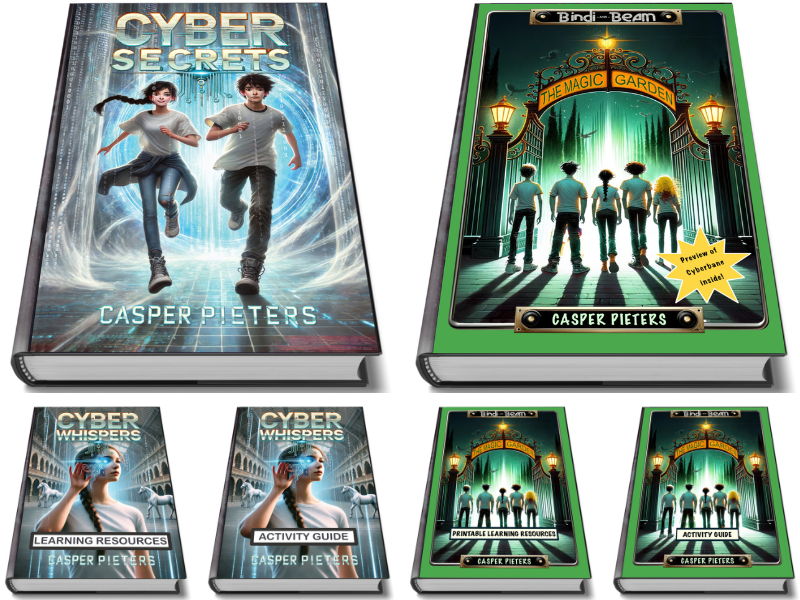
If you're searching for AI resources for homeschool families, Casper Pieters has developed a range of books and learning guides that make these complex topics accessible for children.
Rather than creating textbooks, Casper has developed what he calls “edufiction“ adventure stories that naturally weave digital literacy, AI literacy and critical thinking into engaging narratives. The aim is to help children understand technology through characters and storytelling rather than lectures or fear-based messaging.

The Bindi and Beam Series (Ages 9+)
Designed for younger readers, the Bindi and Beam books introduce important digital concepts through imaginative adventures that parents can read alongside their children.
Some of the titles include:
- The Web Trap – explores technology obsession and the balance between virtual and real-world relationships through the story of a girl who becomes immersed in a virtual reality world.
- The Mauled Mage – focuses on cyberbullying.
- The Magic Garden – helps children think critically about gaming habits and encourages healthier ways to interact with games.
These stories provide a natural starting point for conversations about screen time, online behaviour and digital wellbeing without feeling like a lesson.
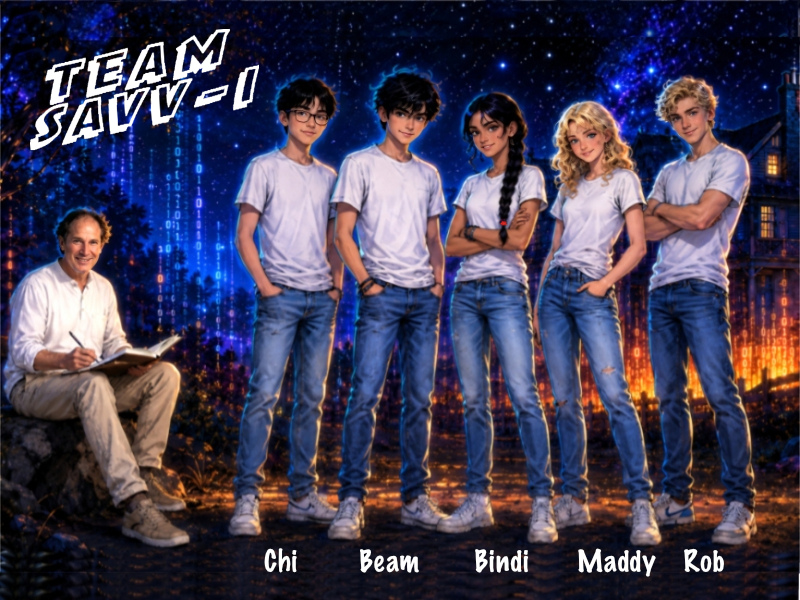
The Team Savv-i (Ages 11-14+)
For older children and young teens, Casper's Team Savv-i series explores more complex topics surrounding artificial intelligence, digital citizenship and ethical technology.
During our interview, Casper and I highlighted titles such as:
- Cyber Secrets – introduces the principles of digital citizenship through a global adventure that encourages young people to think about online responsibility, privacy, digital inclusion and using technology to make a positive difference.
- Brain Rot! – examines persuasive technology and the psychology behind social media. Rather than simply telling children to spend less time online, it helps them understand why apps are designed to capture attention and how algorithms influence their behaviour. It also opens discussions about AI, recommendation systems and critical media thinking.
Throughout the interview, Casper emphasised that understanding why technology works the way it does is far more effective than simply giving children a list of rules.
Learning Resources for Every Teaching Style
One feature that particularly impressed me during our conversation was that Casper hasn't stopped at simply writing novels. He has created an entire learning ecosystem that allows parents to choose how deeply they want to explore each topic.
Depending on your child's age and learning style, you can choose from:
Read Aloud Kits
Ideal for families who enjoy learning together, these kits include selected chapters, guided discussion questions and sensory prompts that encourage children to imagine what they see, hear and feel while listening to the story.
Five Day Mini Units
These ready-to-use units provide worksheets, activities and discussion prompts that explore a single digital literacy topic in greater depth. Despite the name, families can complete them over five days, five weeks or at their own pace.
Complete Learning Systems
For parents wanting a comprehensive study, Casper has developed full learning guides that accompany each novel.
These include:
- chapter summaries
- discussion questions
- printable activities
- zero-tech activities
- technology-supported activities
- assessment rubrics
- extension work for different learning styles
- flexible lesson sequencing
Each Complete Learning System includes practical digital citizenship activities that encourage discussion, critical thinking and real-world application and are designed to work equally well in schools and homeschooling environments, allowing families to tailor the learning experience to each child's interests and pace.
AI Literacy Is About More Than Using AI
Many parents assume teaching AI means showing children how to use tools like ChatGPT.
That's only one small piece of the puzzle. Effective AI education for children goes beyond learning how to use AI tools—it helps them understand how AI influences the information they see every day:
How AI Works
Children don't need advanced technical knowledge, but they should understand that AI recognises patterns from huge amounts of information rather than “thinking” like humans.
How recommendations are made
Many online platforms use AI to decide:
- what videos appear next
- which advertisements are shown
- what appears in social media feeds
Understanding this helps children recognise that what they see online has often been carefully selected for them.
How attention is monetised
Many online platforms are intentionally designed to keep users scrolling through:
- notifications
- endless feeds
- rewards
- colours
- sounds
- recommendations
Helping children recognise these design choices allows them to make more intentional decisions about technology use.
Digital Citizenship and AI Go Hand in Hand
Teaching children about AI should also include digital citizenship.
According to Casper, children benefit from learning about topics such as:
- respectful online communication
- privacy
- online identity
- digital footprints
- cyberbullying
- responsible technology use
- evaluating online information
These skills become even more important as AI-generated content becomes increasingly common.
Read Together and Start Conversations
One suggestion that stood out was reading together.
Stories provide a safe way to discuss difficult topics because the conversation centres on the characters rather than the child.
Instead of asking:
“Would you do that online?”
You might ask:
- Why do you think that character made that choice?
- What could they have done differently?
- How did technology influence the situation?
- Would AI have changed what happened?
These conversations often lead to much deeper understanding than direct instruction.
AI Education Doesn't Need to Be Rushed
Every child learns differently.
One of the strengths of homeschooling is flexibility.
Rather than following a rigid program, parents can explore topics at their child's pace.
You might spend:
- one afternoon discussing AI-generated images
- a week exploring online safety
- a month reading novels that introduce digital citizenship
- several months gradually building AI literacy through conversations
There is no single timeline.
Encourage Children to Think Critically
Perhaps the most valuable skill children can develop is critical thinking.
When children understand how AI and digital platforms influence what they see, they become more capable of asking thoughtful questions.
Encourage them to ask:
- Who created this?
- Why was this shown to me?
- Is this information reliable?
- Could AI have generated this?
- What evidence supports this claim?
These habits will serve them well long after today's AI tools have evolved.
AI Is a Tool, Not the Enemy
One important point Casper emphasised is that technology itself isn't inherently good or bad.
The challenge isn't artificial intelligence.
The challenge is learning to use it wisely.
When children understand how technology works, they become empowered rather than overwhelmed.
Instead of fearing AI, they learn to use it with confidence, curiosity and discernment.
If you've been wondering how to teach your child to understand AI, the answer doesn't begin with coding lessons or complicated technical explanations.
It begins with conversation.
It begins with curiosity.
And often, it begins with a great story.
Watch or Listen to my Interview with Casper Pieter
By helping children understand how artificial intelligence influences the world around them, we equip them with the digital literacy, critical thinking and decision-making skills they'll need for the future.
After all, today's children won't simply grow up using AI. They'll grow up living alongside it. The greatest gift we can give them is the ability to understand it. For families wanting a more structured digital citizenship curriculum, the Complete Learning Systems provide lesson plans, activities and extension ideas that can be adapted to suit different ages and learning styles.
Thank you, Casper, for taking the time to chat with me and share your knowledge with our community. If you would like more details about the range of learning resources that Casper has developed, visit his detailed listing here.
