
Many homeschooling parents begin their journey by trying to replicate a traditional school timetable at home.
Morning maths. Then English. Then science. Each subject is placed neatly into its own box, and at first, it seems logical. After all, this is the system most of us grew up with. But homeschooling can evolve beyond this structure into something more connected, such as theme based homeschooling.
Because many families soon discover something unexpected about the traditional way of schooling:
The constant switching between unrelated subjects can be exhausting, not only for your children, but for parents too. Every 30 or 40 minutes, their brains are asked to jump from one way of thinking to another. A child might move from solving fractions to writing a persuasive paragraph, then immediately shift into learning about ecosystems.
While this structure works within large classrooms, in a home environment, it can create unnecessary friction. This is often when children become disengaged, and you, the parent, can feel like you’re constantly having to reset the learning day. Over time, this mental stop-start rhythm can lead to frustration, disconnection and even burnout.
Learning through connection
Yet children are naturally wired to learn through connection. When something sparks their curiosity, they want to explore it from every angle. They’ll ask questions, investigate and create. Their learning becomes a web of discovery rather than a series of isolated tasks.
This is where theme based homeschooling can completely transform the homeschool experience.
Instead of teaching subjects separately, thematic learning revolves around a central topic or theme. That theme becomes the thread that ties the entire learning experience together.
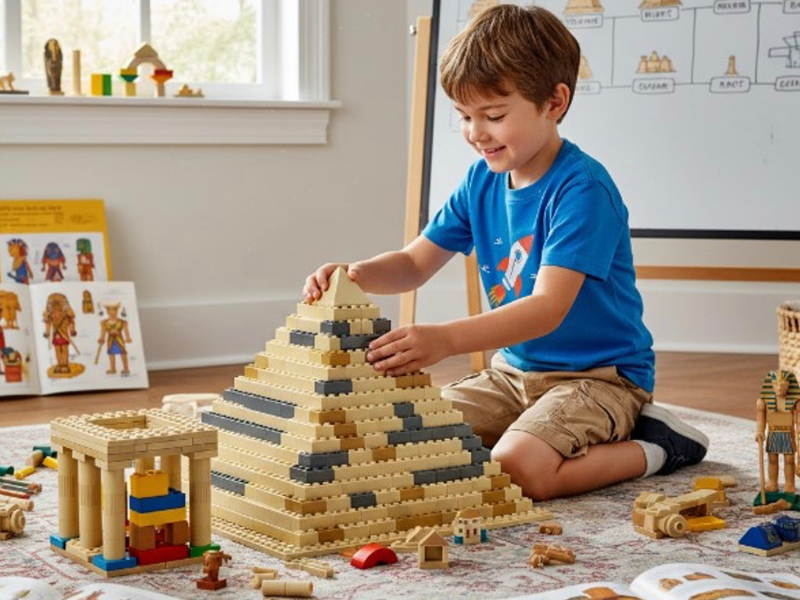
Imagine your family exploring the theme of Ancient Civilisations. Rather than studying history in isolation, the theme begins to naturally expand into multiple areas of learning.
A literacy lesson might involve:
- Reading myths from Ancient Greece
- Writing a diary entry from the perspective of a young Roman citizen
Mathematics could include:
- Exploring Roman numerals
- Measuring the scale of the pyraminds
- Calculating how the ancient engineers constructed aqueducts
Art might involve:
- Designing mosaics inspired by Roman patterns
Science could:
- Explore early innovations in architecture
- Learn more about early astronomy
Suddenly, learning flows organically from one activity to the next. Instead of stopping one subject to begin another, children feel as though they are continuing an unfolding story. This is where remarkable things may happen.
Children begin making their own connections.
A child might suddenly realise that the symmetry used in ancient architecture is the same concept used in their mathematics lesson. Or they may connect a myth they read in the morning to an artwork they create in the afternoon. These are powerful learning moments and a true signal that they aren’t just memorising but their learning is meaningful.
Reducing learning resistance
Theme based homeschooling also tends to reduce resistance to learning. When children feel immersed in a topic that fascinates them, their motivation becomes intrinsic rather than external. They want to keep exploring the topic because they feel connected to it.
For parents, the experience can feel less like managing separate subjects and more like walking alongside their child as they discover interesting people, places and events.
Of course, the beauty of thematic learning does not require a complex curriculum or elaborate planning. Sometimes the most powerful connections are created through simple transitions during the day.
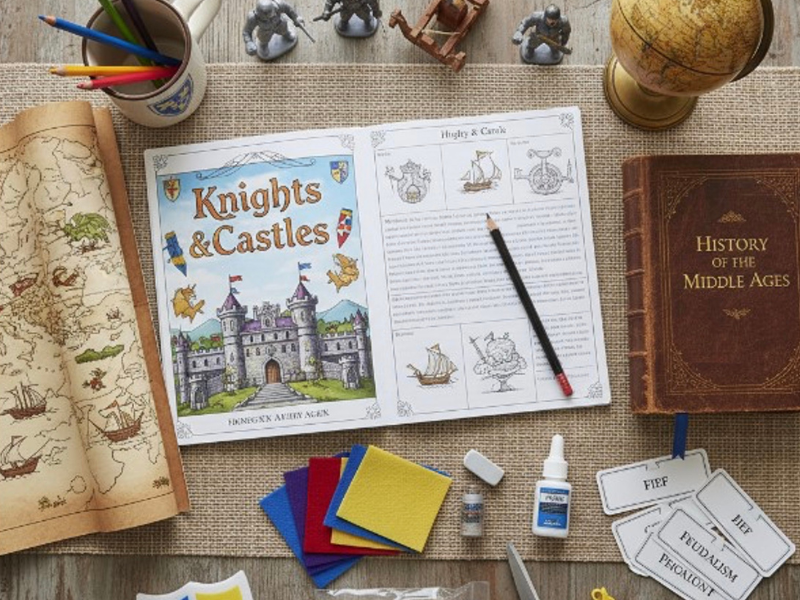
For example, if your morning literacy session involves reading a story about explorers, the afternoon could naturally evolve into:
- Building a map
- Creating a travel journal
- Researching how early navigators used the stars
This builds a momentum where learning continues.
The bridge activity
A simple strategy I often suggest to parents is what I call the “bridge activity.”
At the end of a focused morning lesson, ask one question:
“How could we explore this idea creatively this afternoon?”
That single question can open the door to drawing, building, researching, storytelling, or outdoor exploration.
The key is not perfection, it is curiosity because children learn best when they feel immersed in ideas rather than separated from them. When learning feels connected, and education begins to mirror the real world, there is no need for subjects to be taught in isolation.
As adults, we all know that science influences technology, history shapes culture and that mathematics explains patterns in nature. Everything is connected and when children experience learning this way, they begin to see knowledge not as separate subjects, but as pieces of a much larger puzzle. This is exactly where a true education begins, through theme based homeschooling.
Thanks to Cindy for sharing her wisdom with our community. For more about how you can implement theme based learning in your homeschool, take a look at the Thematic Education Homeschool Program in the directory. Homeschool Resource Finder Directory.
