
When people find out that I am both a karate instructor and a published author, they often look at me with a bit of surprise. But when they find out that I am also dyslexic, their eyebrows really go up. “How do you write books when your brain struggles with words?” they ask. My answer is always the same: Dyslexia simply means my brain is wired differently. But in truth, every single brain works differently.
Whether you are a homeschooling parent or student, everyone has unique strengths and hidden challenges that others don't have. In my journey as both a writer navigating dyslexia and a Sensei guiding students on the mat, I've discovered practical ways to help a struggling learner find a different path forward.
When a student is struggling to master a complex martial arts form, or when I am stuck trying to figure out the next chapter of my book, I use the exact same strategy.
Here are three powerful tools I use to unlock my creative mind, and the very same tools I teach my karate students, regardless of their age or ability.
1. Movement: Activating the Brain's Chemistry
When we get stuck on a difficult problem, whether it is a maths equation, a blank page, or learning to spell, our natural instinct is to sit still and stare at the problem until it is solved. But stagnation in the body can sometimes lead to stagnation in the mind.
Whenever my writing hits a wall, I get up and move. Physical movement floods the body with beneficial chemicals (like dopamine and endorphins) while increasing blood flow and oxygen to the brain. This can help shift us out of a mental rut.
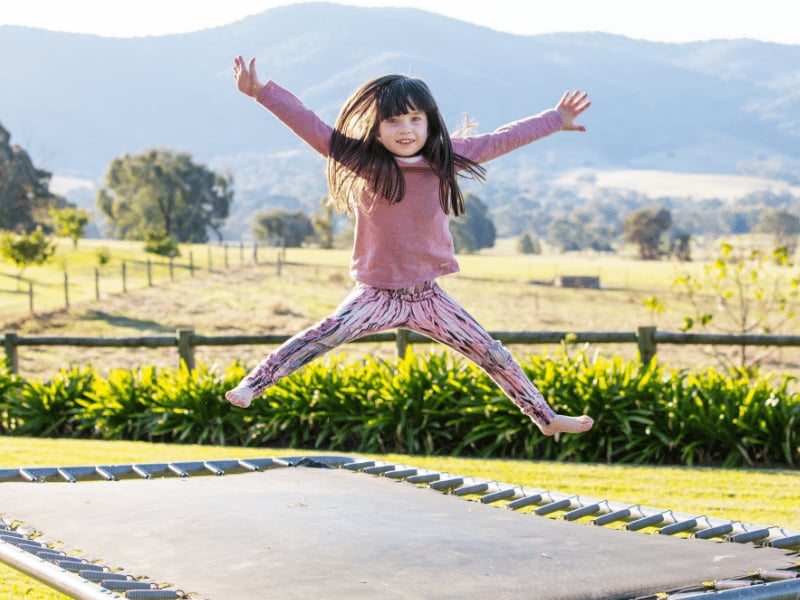
Movement can act like a reset button when a learner is feeling blocked or overwhelmed by a lesson. If your child is struggling, don't automatically force them to sit there and keep trying. Have them stand up, do ten jumping jacks, or run around the yard. Let the body have a chance to reset before returning to the task.
Try a movement break when your child is:
- Staring at a problem without making progress
- Becoming frustrated or overwhelmed
- Finding it difficult to concentrate
- Saying “I can't do this”
- Needing a break before trying again
Simple movement breaks could include:
- 10 jumping jacks
- Running around the yard
- Stretching
- Jumping on the trampoline
- Going for a short walk
- Dancing to a favourite song
The goal isn't to avoid the work. It is to give the brain and body a chance to reset so your child can return to the task with a fresh perspective.
2. Breathing: Opening the Floodgates for Solutions
When frustration takes over, our breathing naturally becomes shallow and rapid. This can contribute to a stress response in the body and make it harder to think clearly. The problem? It is difficult to innovate or solve problems when we feel overwhelmed.
To combat this, I teach my students the power of the conscious breath.
If I am stuck on a creative block, I stop everything and practice a simple breathing pattern: Breathe in deeply through the nose for a count of 4, and exhale slowly through the mouth for a count of 6.
Doing this just a few times deliberately can help the nervous system relax. It can help remove some of the accumulating stress and frustration, clearing away the mental fog. Once the pressure is gone, it can be easier for ideas and solutions to start flowing naturally again.
Try slow breathing when your child is:
- Becoming frustrated with a lesson
- Feeling overwhelmed by a difficult task
- Getting upset after making a mistake
- Struggling to think of a solution
- Feeling like they simply can't continue
A simple breathing exercise to try:
Breathe in through the nose for 4 counts -> breathe out slowly through the mouth for 6 counts. Repeat several times.
This simple strategy that parents can teach child to use whenever learning feels overwhelming. Sometimes a few slow breaths can create enough space to approach a difficult task again.
3. Self Kindness: Protecting the Brain's Power
Perhaps the biggest hurdle to learning and creativity is the anger we direct at ourselves when we don't get something right immediately. We live in a world that demands instant perfection, but the brain simply does not work that way.
When we get angry or frustrated with ourselves, our ability to think creatively, solve complex problems and see new perspectives can be reduced.
In the dojo, mistakes aren't failures; they are just data. They show us where to adjust. I treat my dyslexia with the same self-kindness. By giving myself permission to write terrible first drafts (I don't bother with grammar or spelling at first) I keep my brain open and relaxed.
We can encourage children to think about mistakes in the same way. A wrong maths answer, a spelling mistake or difficulty with a particular lesson doesn't mean a child isn't capable. It igves us teh information about where they may need more practice, a different explanation or a different approach.
Help your child reframe mistakes with phrases such as:
- “What can this mistake tell us?”
- “Let's see where things went off track.”
- “Would another approach help?”
- “You don't have to get it right straight away.”
- “Let's take a break and come back to it.”
When we treat ourselves with grace, we keep our brains working a their highest, most creative capacity.

The Universal Dojo
At the end of the day, every student is on their own unique path. When you're wondering how to help a struggling learner, sometimes the answer isn't to push harder. Sometimes they need to move, breathe, reset and try again.
By teaching our children to move intentionally, breathe through pressure, and treat themselves with kindness, we give them tools they can use when learning gets difficult.
3 Ways to Help a Struggling Learner
If you child is struggling with a lesson, try:
- Move – Take a short physical break to reset
- Breathe – use low, deliberate breathing to reduce frustration
- Be kind – Treat mistakes as information rather than failure
Every unique brain is fully capable of greatness.
Thank you, Sensei Sarhn, author of the OSU Rising series, for sharing these insightful tips with our community. For more information about her work as an author and to access her novels, visit the main Sensei Sarhn listing in the homeschool directory.
